People ask me this question more than any other. Usually it comes from a student who just finished their intermediate, or someone who’s been sitting in a job they hate, or a girl whose family keeps telling her “design toh koi career nahi hai.” And every time, I want to sit them down and have a real conversation, not give them a motivational speech, but actually tell them what this field looks like from the inside.
So that’s what this post is. No fluff. Just what I know from running my own design and marketing agency, completing over 1000 projects, and watching dozens of designers either build something great or burn out and quit.
The Short Answer Nobody Wants to Give You
Yes. Graphic designing is absolutely a good career in Pakistan but only if you treat it like a business skill, not just an art hobby.
I’ve seen people with average design skills earn PKR 150,000 a month because they understood positioning, client communication, and niche selection. I’ve also seen genuinely talented designers struggling to find work because they never learned how to market themselves or price their services properly.
The field rewards the people who combine creativity with strategy. If you’re only one of those, you’ll hit a ceiling fast.
What’s Actually Changed in the Pakistani Design Market
Five years ago, graphic design in Pakistan was mostly print work wedding cards, banners, flex printing. That market still exists, but the real money has moved somewhere else entirely.
Right now the highest demand is in:
- Social media content design businesses need consistent, branded content for Instagram, Facebook, TikTok, and LinkedIn. This is recurring work, meaning one client pays you every single month.
- Brand identity design logos, brand guidelines, business cards, packaging. Pakistani startups are growing, and they need proper branding.
- UI/UX design apps and websites need interfaces. This is where design crosses into tech, and the salaries jump significantly.
- International freelance work, Pakistani designers are earning in dollars on platforms like Fiverr and Upwork. I personally know designers making $1,500–$3,000 a month working from home.
The market has expanded, not shrunk. The mistake most people make is looking at the traditional local design market and concluding the field is overcrowded or underpaid. The local market for a 500-rupee logo? Yes, that’s overcrowded. The international market for a quality brand identity? Nowhere near saturated.
The Salary Reality: Local Jobs vs. Freelancing
Let me be straight with you about numbers because vague answers are useless.
Local studio/agency jobs in Pakistan:
- Junior designer: PKR 25,000 – 45,000/month
- Mid-level designer: PKR 50,000 – 90,000/month
- Senior designer / Creative Director: PKR 100,000 – 200,000+/month
These are real ranges, not best-case scenarios. Growth depends heavily on the agency you join and whether you’re building skills or just executing templates all day.
Freelancing (in dollars):
- Starting out: $100–$300/month (while building portfolio)
- After 6–12 months of consistent work: $500–$1,500/month
- Established freelancer with niche expertise: $2,000–$5,000+/month
The difference is enormous when you convert to rupees. A $1,000 month right now is roughly PKR 280,000. That number changes the entire career calculation.
This is why I always tell students: learn the skill locally, but sell it globally as soon as you can.
What Skills You Actually Need (Not Just “Learn Photoshop”)
The advice “learn Photoshop and Illustrator” is so incomplete it’s almost misleading. Yes, you need tools. But the designers who actually build careers have a different set of competencies that nobody talks about enough.
The technical layer (tools you need):
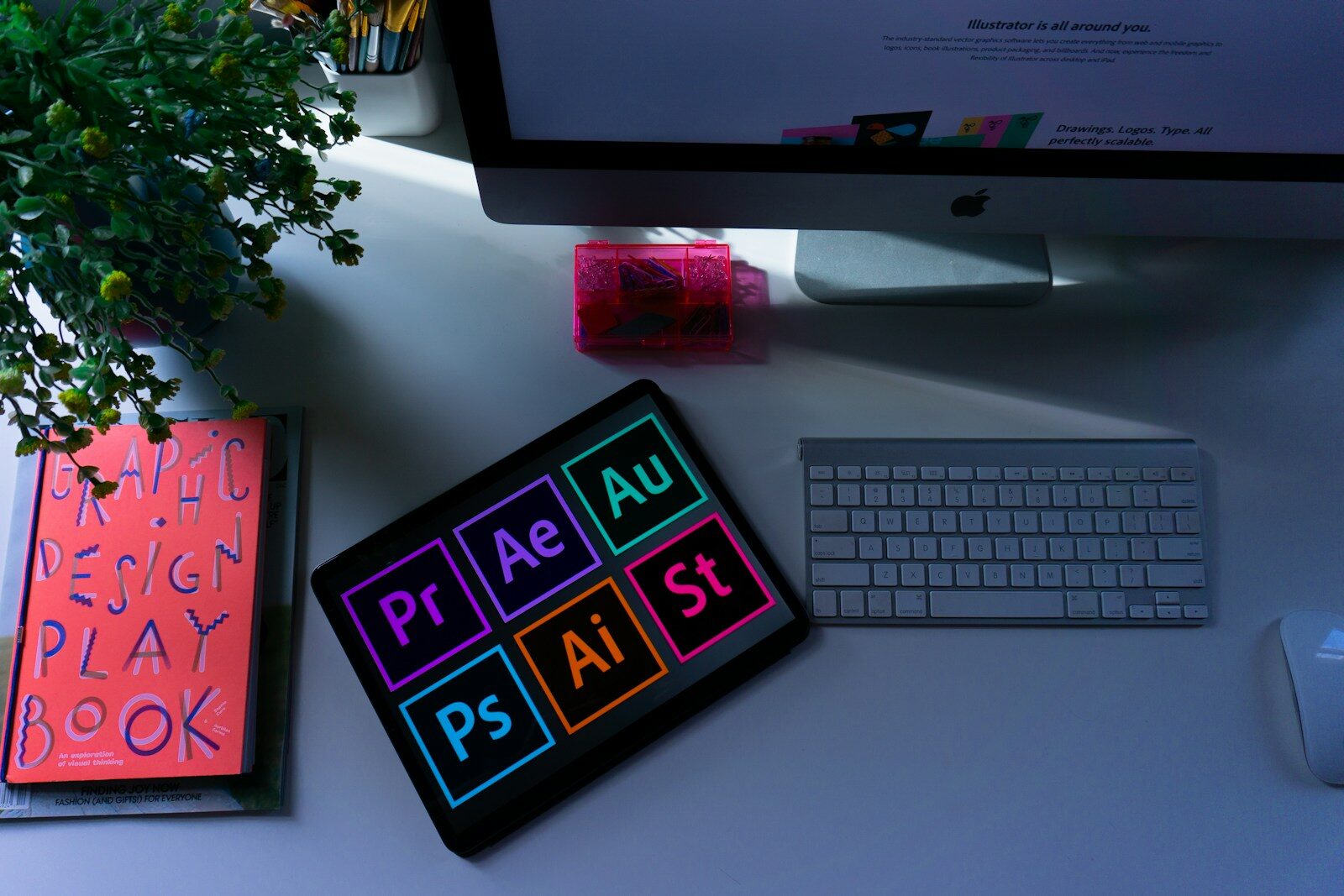
- Adobe Illustrator for vector work, logos, and print design
- Adobe Photoshop for photo editing, digital art, and mockups
- Figma for UI/UX, web design, presentations (free and increasingly essential)
- Canva, yes, even professional designers use it for quick client deliverables
The strategic layer (what separates earners from hobbyists):
- Understanding typography, not just picking fonts, but knowing why certain type choices feel right for certain brands
- Colour theory with real application, how color creates emotion and how to use it in client work
- Brand thinking, designing a logo isn’t about making something pretty, it’s about making something that communicates the right thing to the right audience
- Client communication, knowing how to present work, handle revisions, and set expectations
The business layer (this is what most people skip):
- Pricing your work correctly, not by the hour, but by the value you deliver
- Building a niche, being “the designer for restaurants” or “the designer for coaches” is worth more than being a generalist
- Portfolio curation showing the right work to the right client, not everything you’ve ever made
When I review portfolios of designers looking to grow, the technical work is usually fine. What’s almost always missing is the strategic and business layer. That’s the gap.
Is It Hard to Break Into the Field Without a Degree?
No and I say this as someone who’s hired designers and worked with design teams. Clients don’t ask for your degree. They look at your portfolio, ask about your process, and check your reviews.
Pakistani universities do offer design programs (NCA, PIFD, Beaconhouse, Indus Valley) and they have value you get structured learning, feedback from professionals, and time to experiment. But a degree from NCA will not automatically get you clients, and no degree will not automatically stop you.
What gets you work is a portfolio that shows you can solve real problems, and a reputation built through delivering quality consistently.
If you’re self-learning, the roadmap is clear: YouTube for fundamentals, practice on real or simulated projects, build a portfolio, start applying for small paid work, and keep improving. It takes 6–12 months of consistent effort to reach a marketable level. That’s not a long time considering it’s a skill that can sustain your entire career.
The One Thing That Kills Most Design Careers in Pakistan
Underpricing.
I’ve seen designers with genuinely impressive skills working for PKR 2,000 per logo because they’re afraid to charge more or because they don’t believe their work is worth more. And when you price yourself that low, a few things happen: you attract clients who are difficult and undervalue you, you burn out trying to do volume to make rent, and you have no time to improve your skills.
I made this mistake myself in the beginning. Working for very little, taking every project regardless of budget, and wondering why I felt exhausted and underpaid. The shift happened when I started being selective, raising my rates, and building a niche. The quality of clients improved immediately.
Charge what your work is worth. If you’re not sure what that is, research what international designers charge for similar work and price yourself relative to your current skill level not at the bottom out of fear.
Graphic Design + Social Media = Where the Real Opportunity Is Right Now
This combination is where I’d put my full attention if I were starting today. Every business that exists from a chai dhaba to a tech startup, needs social media content. That content needs to look good. And most business owners either don’t know how or don’t have time.
A designer who understands brand consistency, knows what performs on Instagram versus LinkedIn, and can deliver monthly content packages? That designer is never short of clients. I’ve built a significant part of my own agency on exactly this service.
If you’re a student deciding between “just design” and “design + social media,” the combined path opens more doors, commands better rates, and leads naturally into a full digital marketing agency if that’s where you want to go.
Final Thoughts
Graphic designing is not just a good career in Pakistan for the right person with the right mindset; it’s one of the best. The combination of growing local demand, massive international freelance opportunities, and the ability to build an entire business around creative skills makes it genuinely powerful.
But go in with clear eyes. It takes real effort to build. You need to develop both the creative and business sides. And you need to resist the pull of undervaluing yourself just because the market around you often does.
If you’re willing to put in that work, the ceiling is high. I’ve seen it firsthand in my own career and in the students I’ve watched grow through KnowFreelance. The opportunity is real. You just have to take it seriously.